
Search Results for compounds
Searching compounds for acetyl acid returned 239580 results.
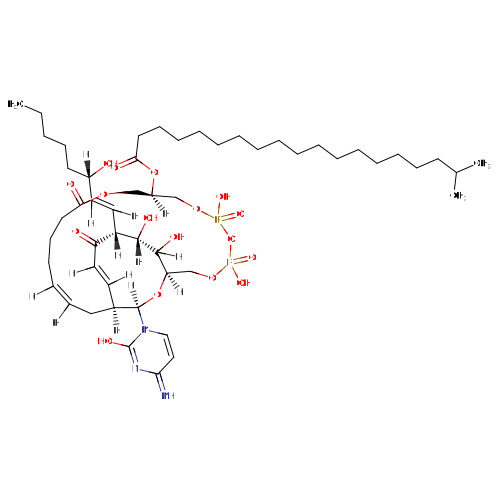
Matched description: … Similarly to what occurs with phospholipids, the fatty acid distribution at the C-1 and C-2 positions ... is the case with diacylglycerols, CDP-diacylglycerols can have many different combinations of fatty acids …
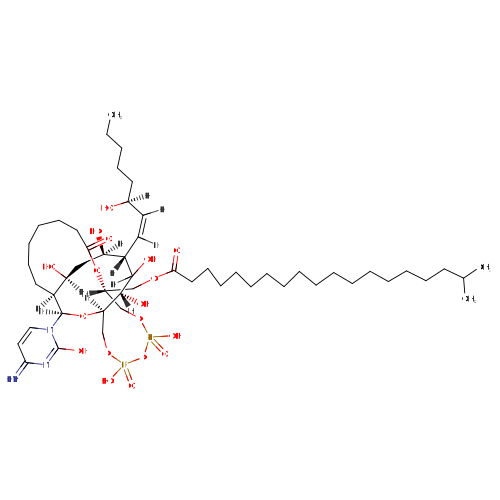
Matched description: … Similarly to what occurs with phospholipids, the fatty acid distribution at the C-1 and C-2 positions ... is the case with diacylglycerols, CDP-diacylglycerols can have many different combinations of fatty acids …
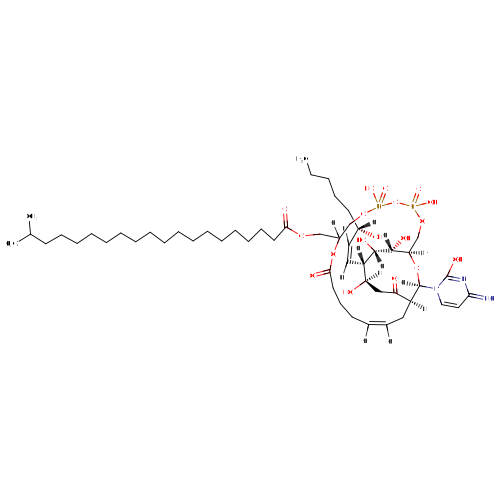
Matched description: … Similarly to what occurs with phospholipids, the fatty acid distribution at the C-1 and C-2 positions ... is the case with diacylglycerols, CDP-diacylglycerols can have many different combinations of fatty acids …
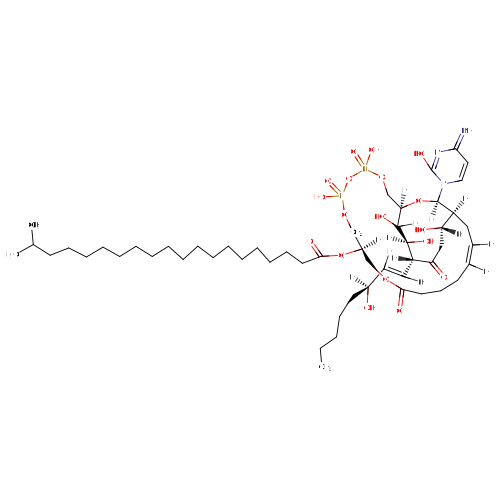
Matched description: … Similarly to what occurs with phospholipids, the fatty acid distribution at the C-1 and C-2 positions ... is the case with diacylglycerols, CDP-diacylglycerols can have many different combinations of fatty acids …
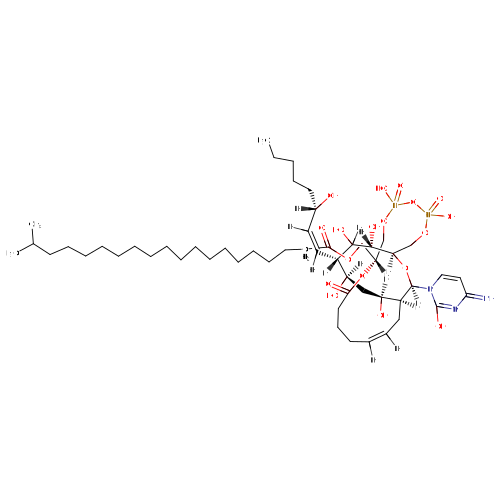
Matched description: … Similarly to what occurs with phospholipids, the fatty acid distribution at the C-1 and C-2 positions ... is the case with diacylglycerols, CDP-diacylglycerols can have many different combinations of fatty acids …
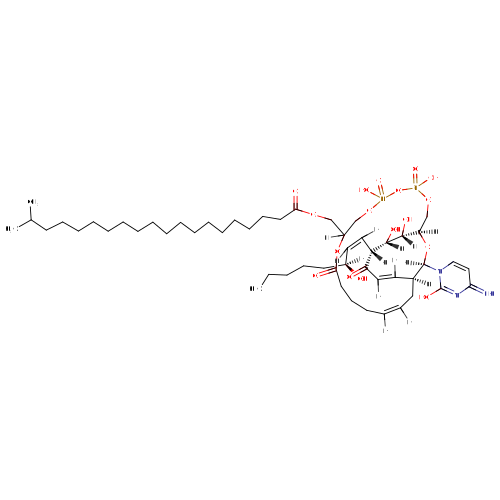
Matched description: … Similarly to what occurs with phospholipids, the fatty acid distribution at the C-1 and C-2 positions ... is the case with diacylglycerols, CDP-diacylglycerols can have many different combinations of fatty acids …
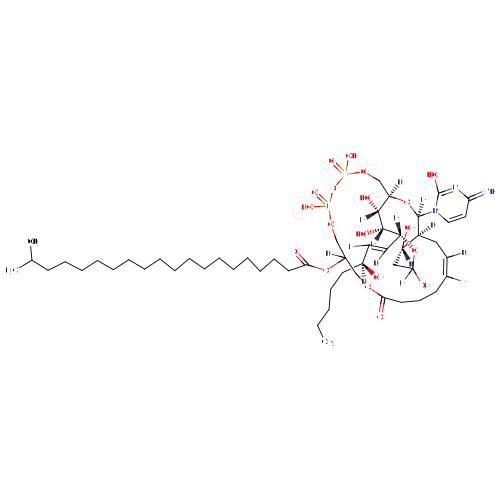
Matched description: … Similarly to what occurs with phospholipids, the fatty acid distribution at the C-1 and C-2 positions ... is the case with diacylglycerols, CDP-diacylglycerols can have many different combinations of fatty acids …
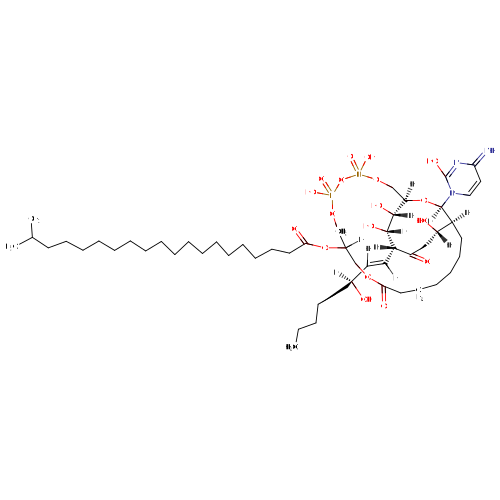
Matched description: … Similarly to what occurs with phospholipids, the fatty acid distribution at the C-1 and C-2 positions ... is the case with diacylglycerols, CDP-diacylglycerols can have many different combinations of fatty acids …
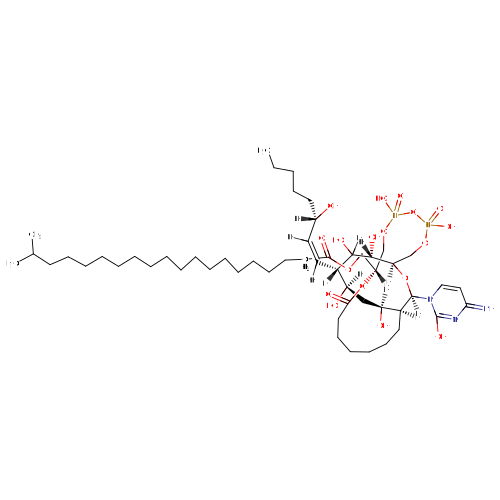
Matched description: … Similarly to what occurs with phospholipids, the fatty acid distribution at the C-1 and C-2 positions ... is the case with diacylglycerols, CDP-diacylglycerols can have many different combinations of fatty acids …
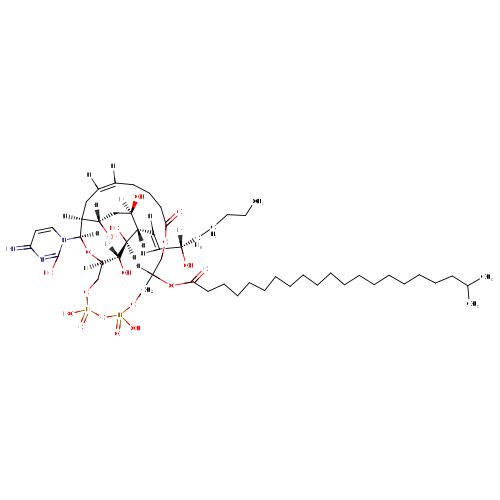
Matched description: … Similarly to what occurs with phospholipids, the fatty acid distribution at the C-1 and C-2 positions ... is the case with diacylglycerols, CDP-diacylglycerols can have many different combinations of fatty acids …
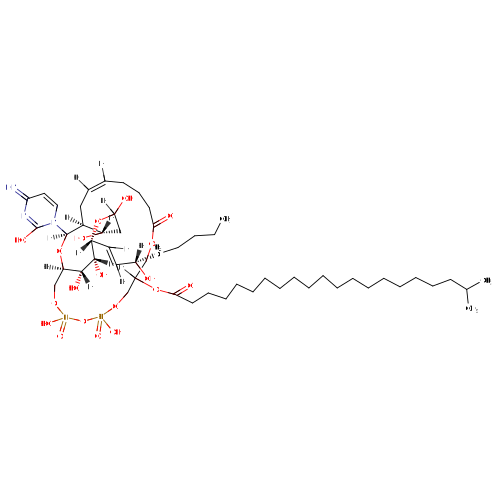
Matched description: … Similarly to what occurs with phospholipids, the fatty acid distribution at the C-1 and C-2 positions ... is the case with diacylglycerols, CDP-diacylglycerols can have many different combinations of fatty acids …
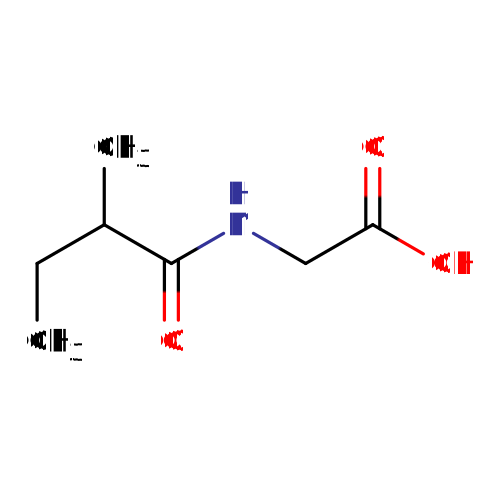
Matched description: … Acyl glycines are normally minor metabolites of fatty acids. ... these metabolites in body fluids can be used to diagnose disorders associated with mitochondrial fatty acid …
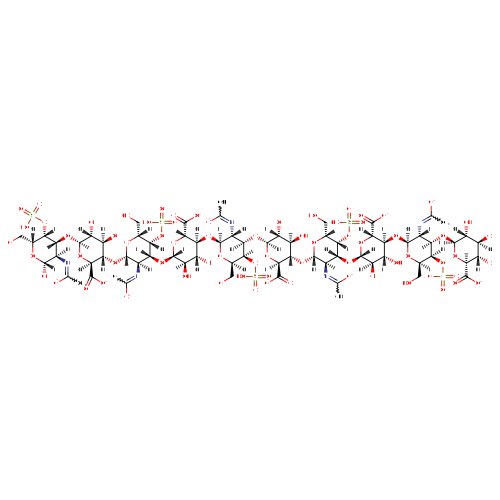
Matched description: … sulfate (CS) is a linear heteropolysaccharide consisting of repeating disaccharide units of glucuronic acid ... Additional enzymes exist for the epimerization of GlcA, sulfation of the uronic acids, and other patterns …
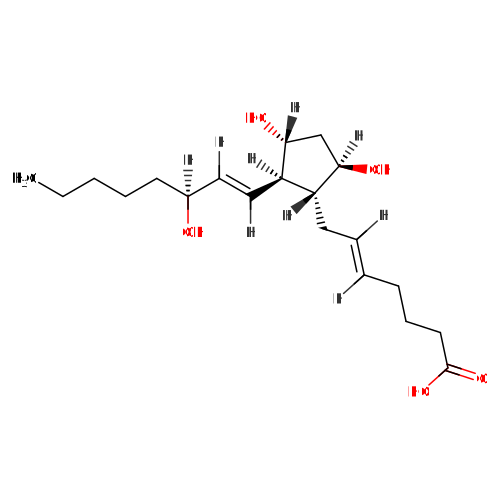
Matched description: … Isoprostanes are arachidonic acid metabolites produced by peroxidative attack of membrane lipids. ... They are created as major products by free-radical catalyzed peroxidation of esterified arachidonic acid …

Matched description: … It is oxidized by chromic acid to isovaleraldehyde, and it forms crystalline addition compounds with ... Tissier (Comptes Rendus, 1891, 112, p. 1065) by the reduction of a mixture of trimethyl acetic acid and …
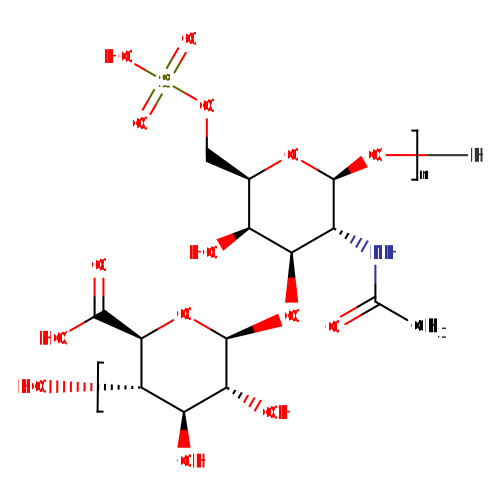
Matched description: … sulfate (CS) is a linear heteropolysaccharide consisting of repeating disaccharide units of glucuronic acid ... Additional enzymes exist for the epimerization of GlcA, sulfation of the uronic acids, and other patterns …
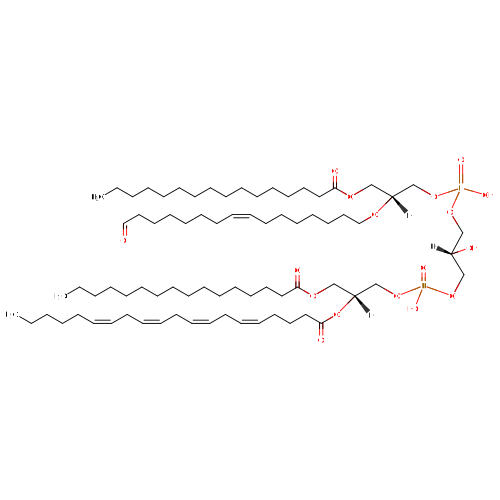
Matched description: … CL(16:0/16:1(8Z)/16:0/20:4(5Z,8Z,11Z,14Z)) contains two chains of hexadecanoic acid at the C1 and C3 ... Cardiolipins are sometimes called a 'double' phospholipid because they have four fatty acid tails, instead …
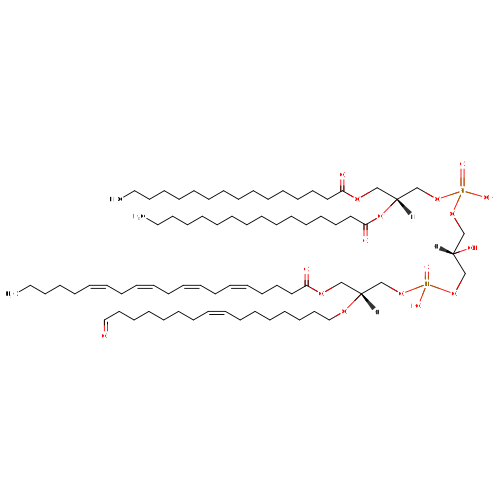
Matched description: … CL(16:0/16:0/20:4(5Z,8Z,11Z,14Z)/16:1(8Z)) contains two chains of hexadecanoic acid at the C1 and C2 ... Cardiolipins are sometimes called a 'double' phospholipid because they have four fatty acid tails, instead …

Matched description: … CL(16:0/16:0/20:4(5Z,8Z,11Z,14Z)/18:2(9Z,11Z)) contains two chains of hexadecanoic acid at the C1 and ... Cardiolipins are sometimes called a 'double' phospholipid because they have four fatty acid tails, instead …
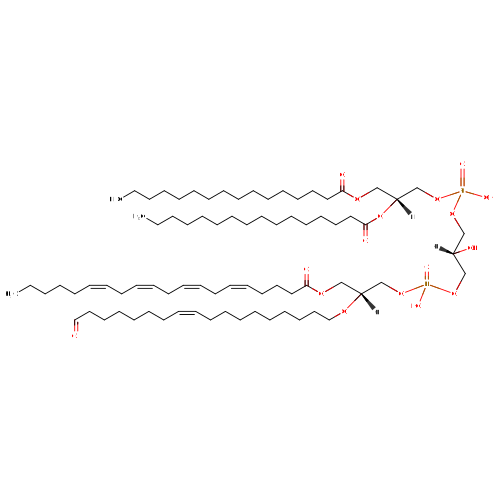
Matched description: … CL(16:0/16:0/20:4(5Z,8Z,11Z,14Z)/18:1(8Z)) contains two chains of hexadecanoic acid at the C1 and C2 ... Cardiolipins are sometimes called a 'double' phospholipid because they have four fatty acid tails, instead …
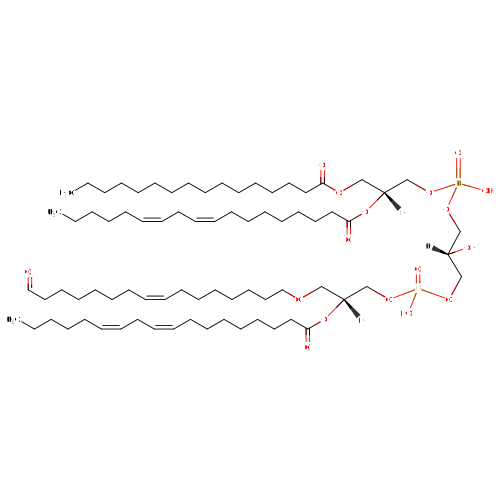
Matched description: … Cardiolipins are sometimes called a 'double' phospholipid because they have four fatty acid tails, instead ... CL(16:0/18:2(9Z,12Z)/16:1(8Z)/18:2(9Z,12Z)) contains one chain of hexadecanoic acid at the C1 position …
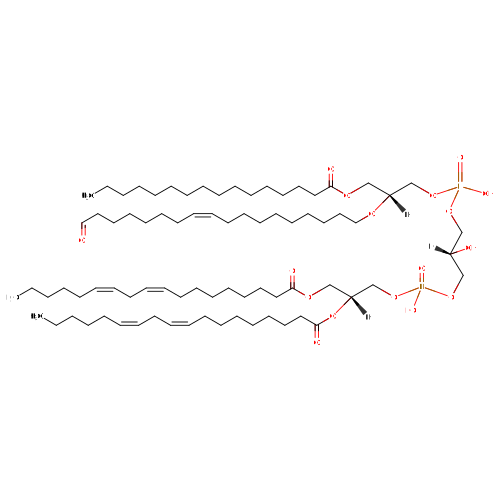
Matched description: … Cardiolipins are sometimes called a 'double' phospholipid because they have four fatty acid tails, instead ... CL(16:0/18:1(8Z)/18:2(9Z,12Z)/18:2(9Z,12Z)) contains one chain of hexadecanoic acid at the C1 position …
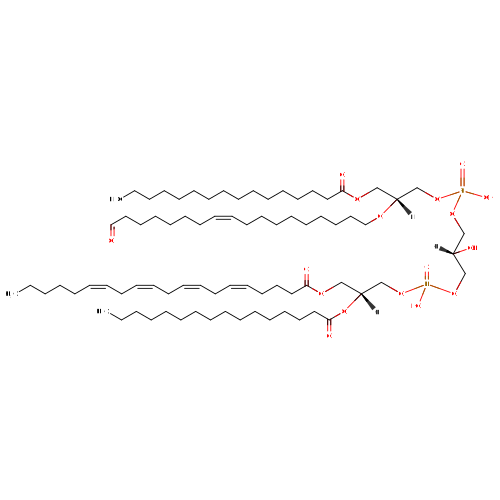
Matched description: … CL(16:0/18:1(8Z)/20:4(5Z,8Z,11Z,14Z)/16:0) contains two chains of hexadecanoic acid at the C1 and C4 ... Cardiolipins are sometimes called a 'double' phospholipid because they have four fatty acid tails, instead …
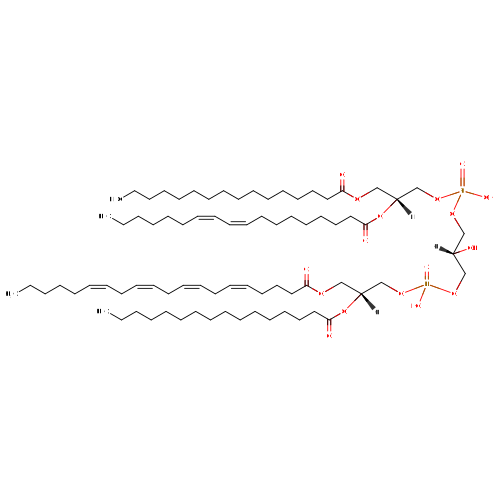
Matched description: … CL(16:0/18:2(9Z,11Z)/20:4(5Z,8Z,11Z,14Z)/16:0) contains two chains of hexadecanoic acid at the C1 and ... Cardiolipins are sometimes called a 'double' phospholipid because they have four fatty acid tails, instead …
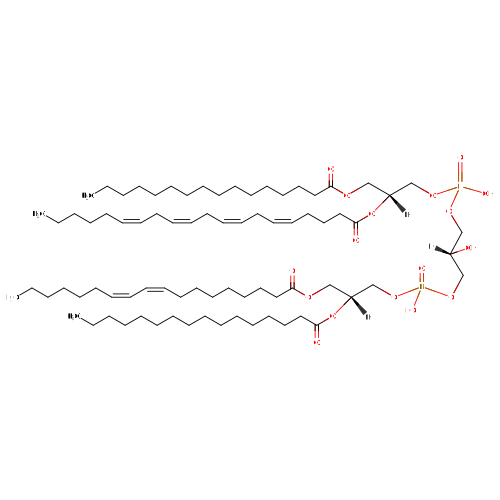
Matched description: … CL(16:0/20:4(5Z,8Z,11Z,14Z)/18:2(9Z,11Z)/16:0) contains two chains of hexadecanoic acid at the C1 and ... Cardiolipins are sometimes called a 'double' phospholipid because they have four fatty acid tails, instead …