
Search Results for compounds
Searching compounds for acetyl acid returned 239580 results.
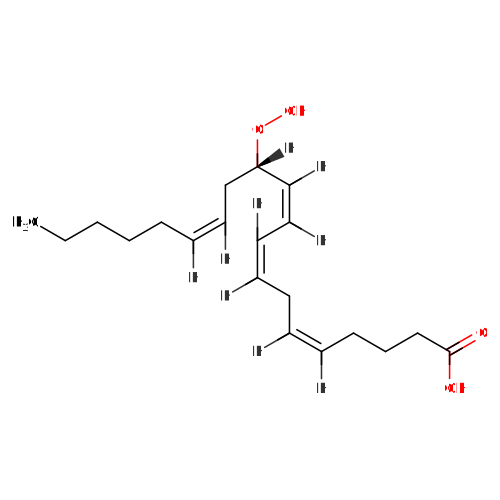
Matched description: … acid (Leukotrienes). ... Reduction of the hydroperoxide yields the more stable hydroxyl fatty acid (+/-)12-HETE. ... 12-HPETE is one of the six monohydroperoxy fatty acids produced by the non-enzymatic oxidation of arachidonic …
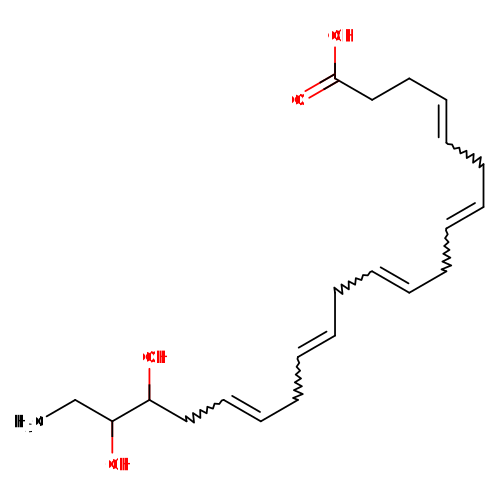
Matched description: … Docosahexaenoic acid (DHA) is an essential fatty acid and the most abundant omega-3 fatty acid in neural ... 19,20-DiHDPA is one of the major metabolites produced when Docosahexaenoic acid (DHA) is incubated with …
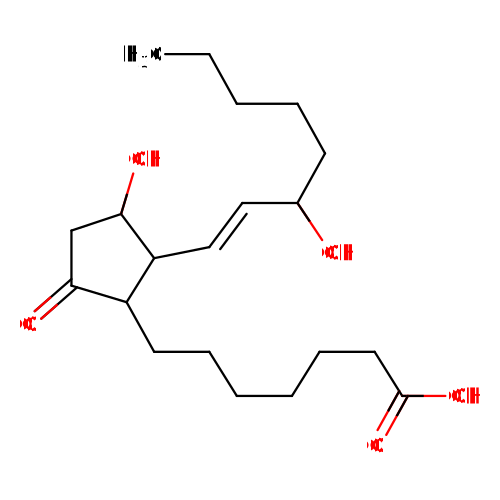
Matched description: … that also contains a five member ring, and are based upon the fatty acid arachidonic acid. ... Prostaglandins and related compounds are unsaturated carboxylic acids consisting of a 20 carbon skeleton ... Prostaglandin e-1 is practically insoluble (in water) and a weakly acidic compound (based on its pKa) …
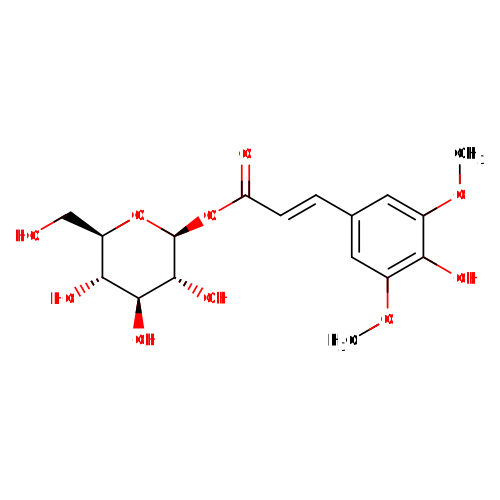
Matched description: … Hydroxycinnamic acid glycosides are glycosylated hydoxycinnamic acids derivatives. 1-o-sinapoyl-beta-d-glucose ... 1-o-sinapoyl-beta-d-glucose is a member of the class of compounds known as hydroxycinnamic acid glycosides ... is slightly soluble (in water) and a very weakly acidic compound (based on its pKa). 1-o-sinapoyl-beta-d-glucose …
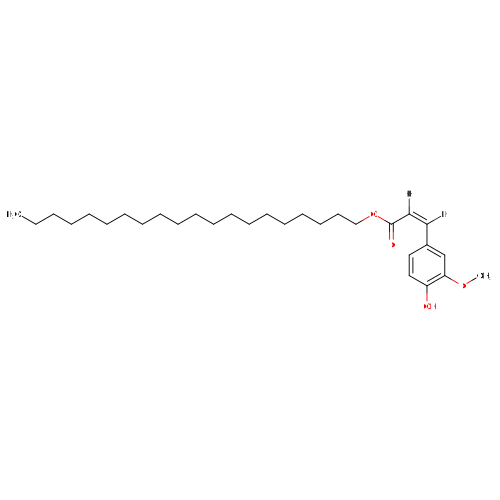
Matched description: … Eicosyl ferulate, also known as eicosyl ferulic acid, belongs to coumaric acids and derivatives class ... Eicosyl ferulate is practically insoluble (in water) and a very weakly acidic compound (based on its ... Those are aromatic compounds containing Aromatic compounds containing a cinnamic acid moiety (or a derivative …
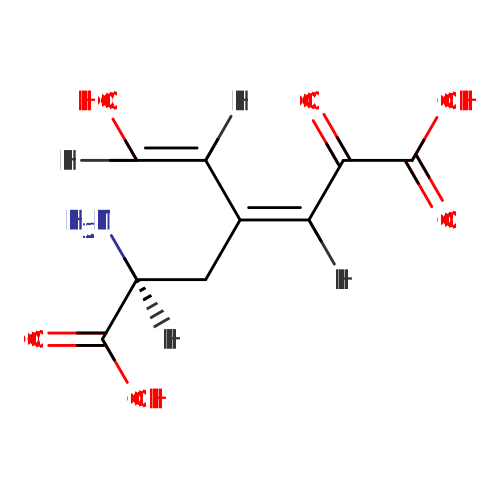
Matched description: … L-alpha-amino acids are alpha amino acids which have the L-configuration of the alpha-carbon atom. 4,5 ... 4,5-seco-dopa is a member of the class of compounds known as L-alpha-amino acids. ... -seco-dopa is practically insoluble (in water) and a moderately acidic compound (based on its pKa). 4,5 …
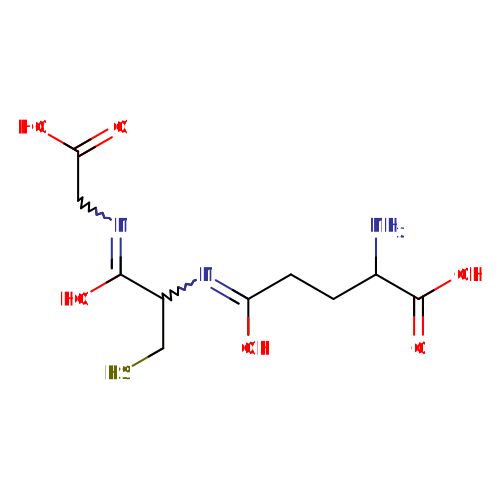
Matched description: … Glutathionate(1-) is considered to be soluble (in water) and acidic ... Oligopeptides are organic compounds containing a sequence of between three and ten alpha-amino acids ... Glutathionate(1-), also known as Glutathionic acid or Glutathione, is classified as a member of the Oligopeptides …
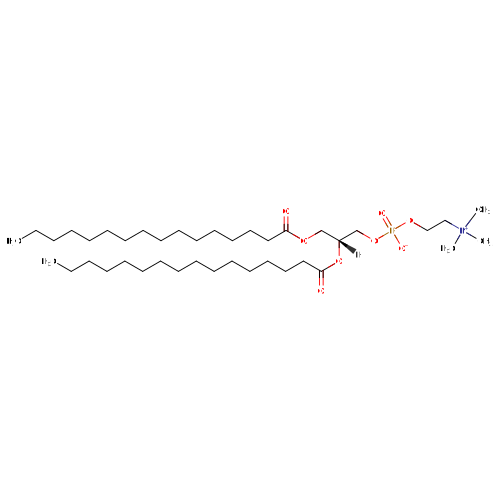
Matched description: … While most phospholipids have a saturated fatty acid on C-1 and an unsaturated fatty acid on C-2 of the ... Fatty acids containing 16, 18 and 20 carbons are the most common. ... The palmitic acid moieties are derived from fish oils, milk fats, vegetable oils and animal fats. …
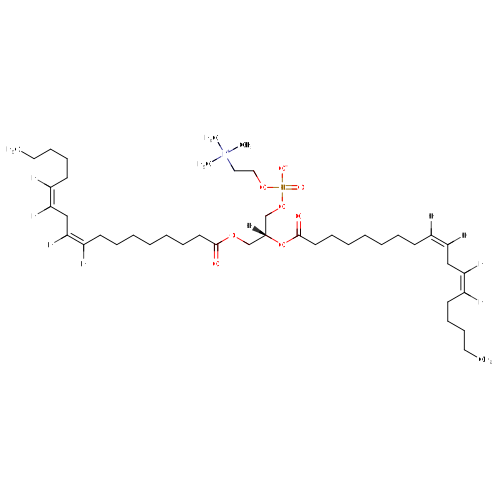
Matched description: … on C-1 and an unsaturated fatty acid on C-2 of the glycerol backbone, the fatty acid distribution at ... The linoleic acid moieties are derived from seed oils. ... Fatty acids containing 16, 18 and 20 carbons are the most common. …
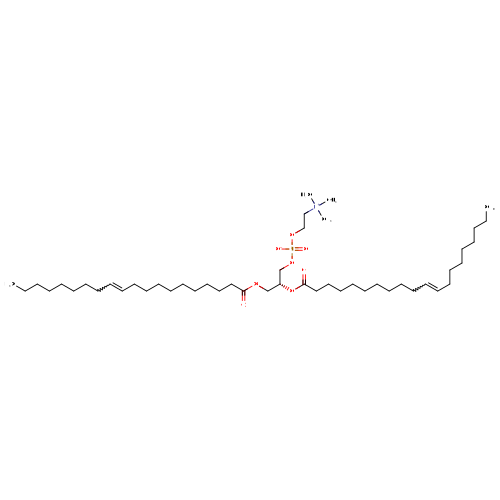
Matched description: … on C-1 and an unsaturated fatty acid on C-2 of the glycerol backbone, the fatty acid distribution at ... Fatty acids containing 16, 18 and 20 carbons are the most common. ... The eicosenoic acid moieties are derived from vegetable oils and cod oils. …
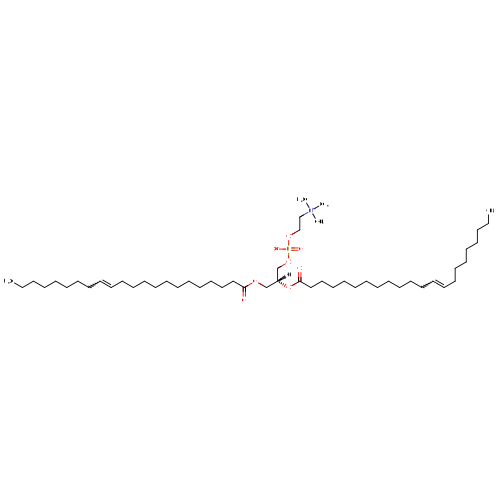
Matched description: … While most phospholipids have a saturated fatty acid on C-1 and an unsaturated fatty acid on C-2 of the ... Fatty acids containing 16, 18 and 20 carbons are the most common. ... The erucic acid moieties are derived from seed oils and avocados. …
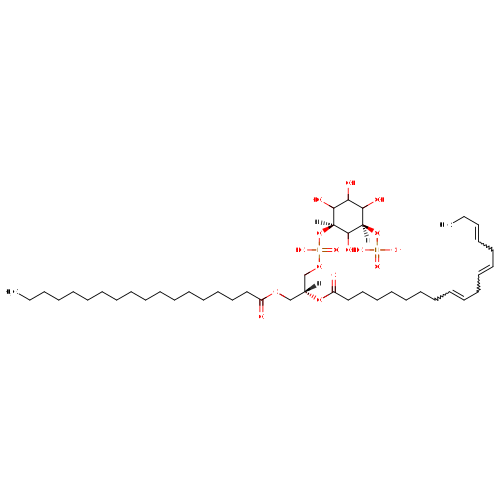
Matched description: … Phosphatidylinositol phosphates are acidic (anionic) phospholipids that consist of a phosphatidic acid ... and one chain of a-linolenic acid at the C-2 position. ... Fatty acids containing 18 and 20 carbons are the most common. …
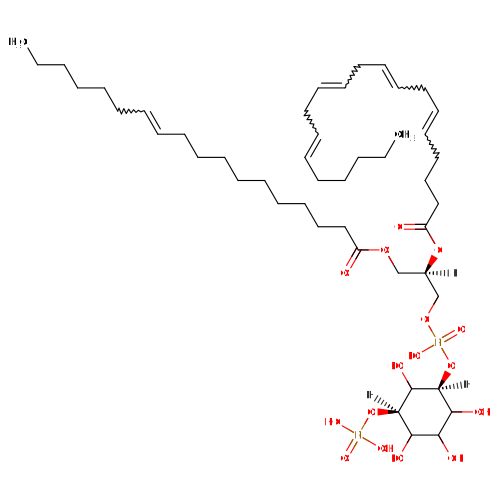
Matched description: … Phosphatidylinositol phosphates are acidic (anionic) phospholipids that consist of a phosphatidic acid ... The vaccenic acid moiety is derived from butter fat and animal fat, while the arachidonic acid moiety ... Fatty acids containing 18 and 20 carbons are the most common. …
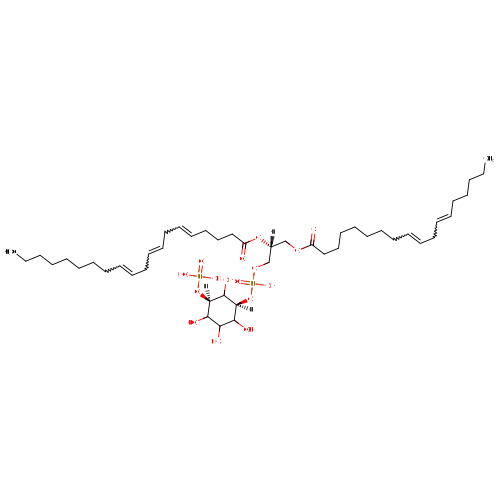
Matched description: … Phosphatidylinositol phosphates are acidic (anionic) phospholipids that consist of a phosphatidic acid ... The linoleic acid moiety is derived from seed oils, while the mead acid moiety is derived from fish oils ... and one chain of mead acid at the C-2 position. …
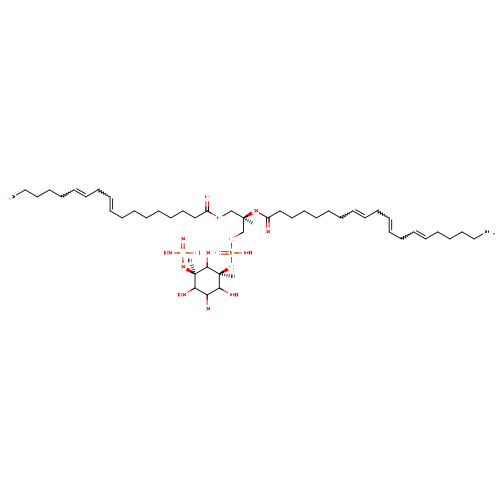
Matched description: … Phosphatidylinositol phosphates are acidic (anionic) phospholipids that consist of a phosphatidic acid ... The linoleic acid moiety is derived from seed oils, while the homo-g-linolenic acid moiety is derived ... Fatty acids containing 18 and 20 carbons are the most common. …
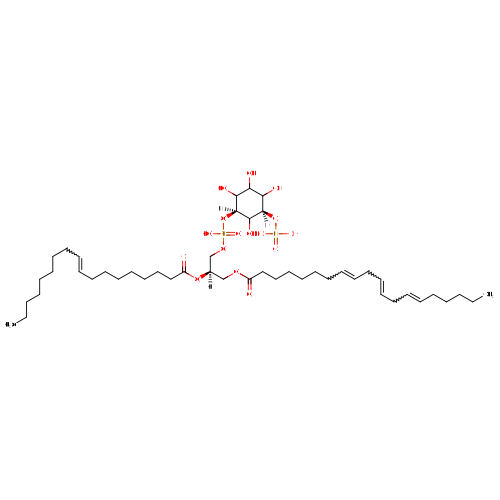
Matched description: … Phosphatidylinositol phosphates are acidic (anionic) phospholipids that consist of a phosphatidic acid ... The homo-g-linolenic acid moiety is derived from fish oils, liver and kidney, while the oleic acid moiety ... Fatty acids containing 18 and 20 carbons are the most common. …
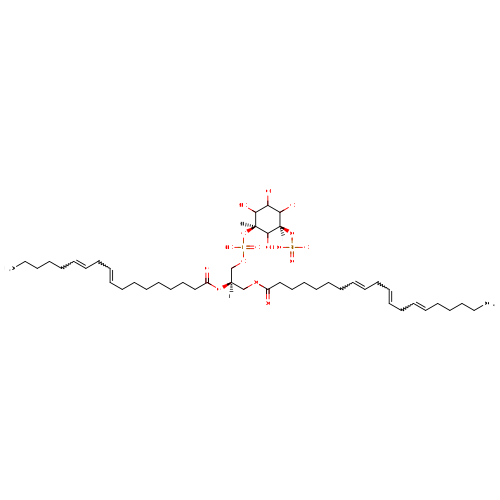
Matched description: … Phosphatidylinositol phosphates are acidic (anionic) phospholipids that consist of a phosphatidic acid ... The homo-g-linolenic acid moiety is derived from fish oils, liver and kidney, while the linoleic acid ... Fatty acids containing 18 and 20 carbons are the most common. …
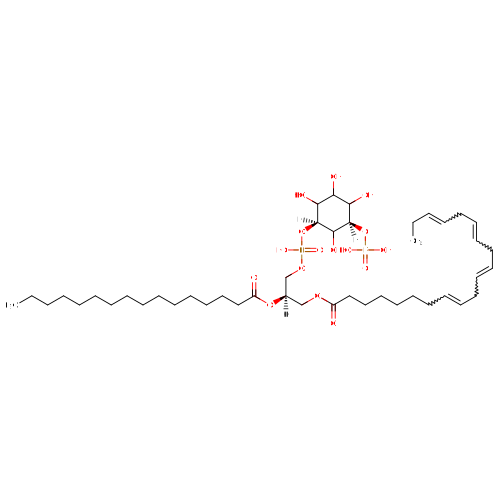
Matched description: … Phosphatidylinositol phosphates are acidic (anionic) phospholipids that consist of a phosphatidic acid ... The eicsoatetraenoic acid moiety is derived from fish oils, while the palmitic acid moiety is derived ... Fatty acids containing 18 and 20 carbons are the most common. …
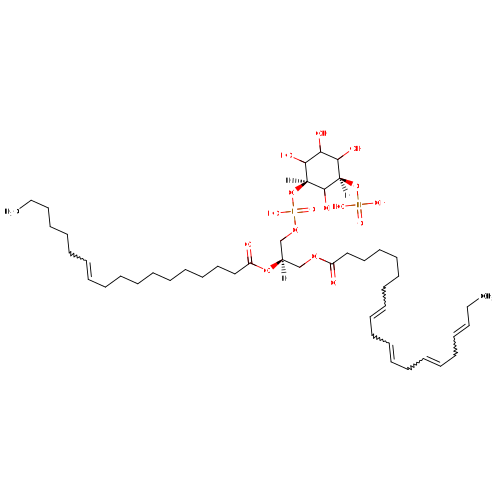
Matched description: … Phosphatidylinositol phosphates are acidic (anionic) phospholipids that consist of a phosphatidic acid ... The eicsoatetraenoic acid moiety is derived from fish oils, while the vaccenic acid moiety is derived ... Fatty acids containing 18 and 20 carbons are the most common. …
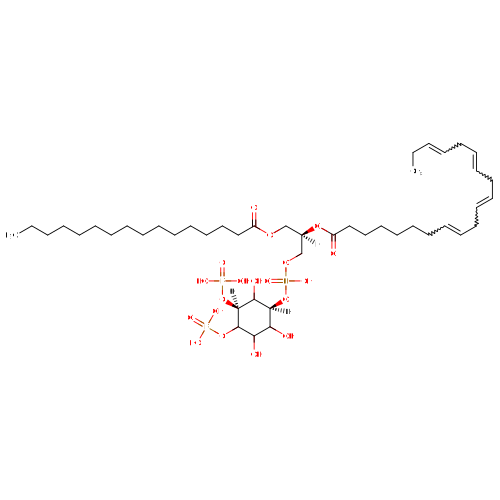
Matched description: … the eicsoatetraenoic acid moiety is derived from fish oils. ... and one chain of eicsoatetraenoic acid at the C-2 position. ... Fatty acids containing 18 and 20 carbons are the most common. …
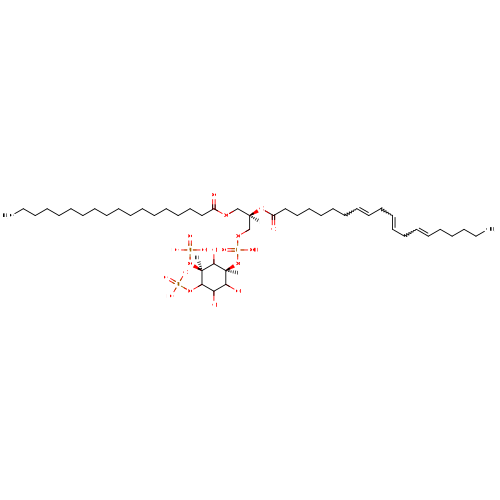
Matched description: … acid moiety is derived from fish oils, liver and kidney. ... and one chain of homo-g-linolenic acid at the C-2 position. ... Fatty acids containing 18 and 20 carbons are the most common. …
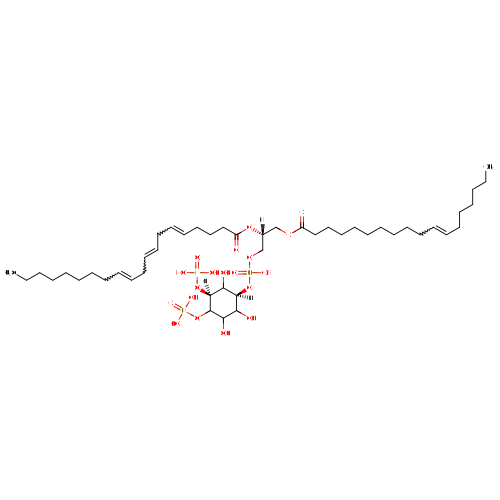
Matched description: … The vaccenic acid moiety is derived from butter fat and animal fat, while the mead acid moiety is derived ... and one chain of mead acid at the C-2 position. ... Fatty acids containing 18 and 20 carbons are the most common. …
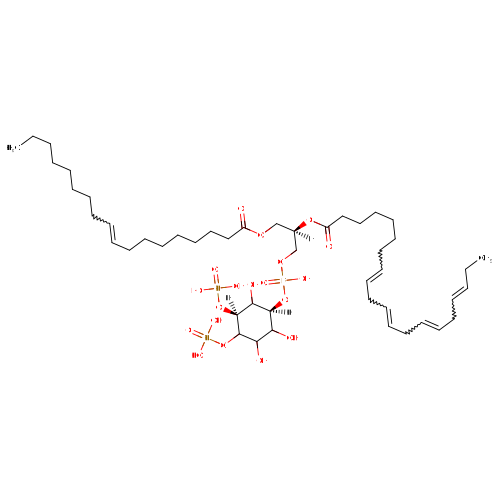
Matched description: … acid moiety is derived from fish oils. ... and one chain of eicsoatetraenoic acid at the C-2 position. ... Fatty acids containing 18 and 20 carbons are the most common. …
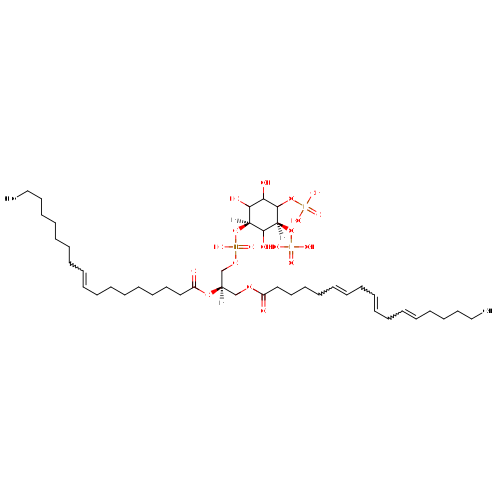
Matched description: … The g-linolenic acid moiety is derived from animal fats, while the oleic acid moiety is derived from ... and one chain of oleic acid at the C-2 position. ... Fatty acids containing 18 and 20 carbons are the most common. …
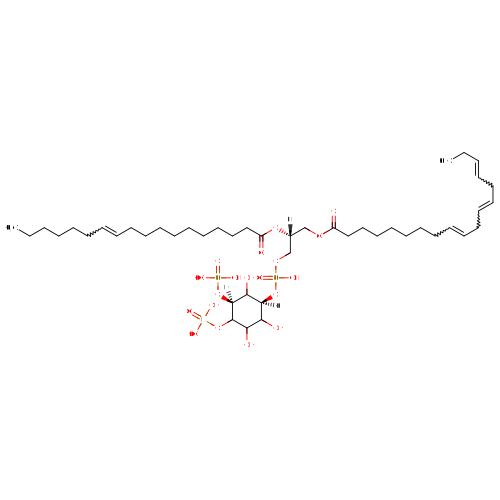
Matched description: … acid moiety is derived from butter fat and animal fat. ... Fatty acids containing 18 and 20 carbons are the most common. ... position and one chain of vaccenic acid at the C-2 position. …