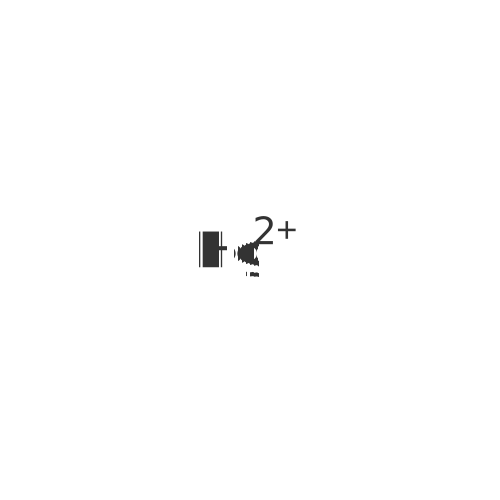
| Definition | Hg2+, also known as hg(2+) or mercuric ion, is a member of the class of compounds known as homogeneous transition metal compounds. Homogeneous transition metal compounds are inorganic compounds containing only metal atoms,with the largest atom being a transition metal atom. Hg2+ can be found in a number of food items such as winter squash, thistle, greenthread tea, and japanese pumpkin, which makes hg2+ a potential biomarker for the consumption of these food products. Hg2+ can be found primarily in blood, cerebrospinal fluid (CSF), and urine. Moreover, hg2+ is found to be associated with alzheimer's disease, multiple sclerosis, and parkinson's disease. Hg2+ is formally rated as an unfounded non-carcinogenic (IARC 3) potentially toxic compound. Mercury poisoning is treated by immediate decontamination and chelation therapy using DMSA, DMPS, DPCN, or dimercaprol (A7) Identifying and removing the source of the mercury is crucial. Decontamination requires removal of clothes, washing skin with soap and water, and flushing the eyes with saline solution as needed. Inorganic ingestion such as mercuric chloride should be approached as the ingestion of any other serious caustic. Immediate chelation therapy is the standard of care for a patient showing symptoms of severe mercury poisoning or the laboratory evidence of a large total mercury load. Chelation therapy for acute inorganic mercury poisoning can be done with DMSA (dimercaptosuccinic acid), 2,3-dimercapto-1-propanesulfonic acid (DMPS), D-penicillamine (DPCN), or dimercaprol (BAL). Only DMSA is FDA-approved for use in children for treating mercury poisoning (T3DB). |
|---|