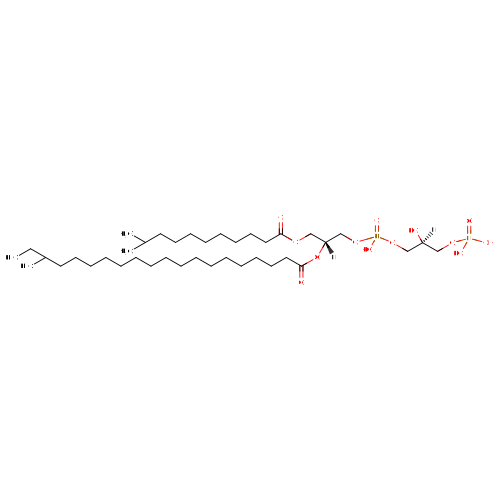
Showing chemical card for PGP(i-12:0/a-21:0) (CFc000096943)
Record Information
Version
1.0
Creation Date
2022-08-28 10:25:12 UTC
Update Date
2022-09-13 21:09:57 UTC
Chemfont ID
CFc000096943
Molecule Identification
Common Name
PGP(i-12:0/a-21:0)
Definition
PGP(i-12:0/a-21:0) is a phosphatidylglycerophosphate (PGP). It is a glycerophospholipid in which a phosphoglycerol moiety occupies a glycerol substitution site followed by another phosphate moiety. Phosphatidylglycerolphosphate is present at a level of 1-2% in most animal tissues, but it can be the second most abundant phospholipid in lung surfactant (up to 11% of the total). It is well established that the concentration of phosphatidylglycerolphosphate increases during fetal development. Phosphatidylglycerolphosphate may be present in animal tissues merely as a precursor for cardiolipin synthesis. As is the case with diacylglycerols, phosphatidylglycerophosphates can have many different combinations of fatty acids of varying lengths and saturation attached to the C-1 and C-2 positions. Fatty acids containing 16, 18 and 20 carbons are the most common. PGP(i-12:0/a-21:0), in particular, consists of one chain of isododecanoic acid at the C-1 position and one chain of anteisoheneicosanoic acid at the C-2 position. They are synthesized by the addition of glycerol 3-phosphate to a CDP-diacylglycerol. In turn, PGPs are dephosphorylated to phosphatidylglycerols (PGs). While most phospholipids have a saturated fatty acid on C-1 and an unsaturated fatty acid on C-2 of the glycerol backbone, the fatty acid distribution at the C-1 and C-2 positions of glycerol within phospholipids is continually in flux, owing to phospholipid degradation and the continuous phospholipid remodeling that occurs while these molecules are in membranes.
Belongs to the class of organic compounds known as phosphatidylglycerophosphates. These are glycerophosphoglycerophosphates in which two fatty acids are bonded to the 1-glycerol moiety through ester linkages.